
Bugs, Bones & Botany: Blog
Notes from the woods, the desk, and the research pile. This space shares updates, reflections, and evidence-informed snippets from research and practice. Posts offer accessible summaries with sources, encouraging curiosity, critical thinking, and deeper exploration, while reflecting an ongoing commitment to learning and professional growth.
May 2026
Context One Archaeology Dig: Weymouth Open Day - Coming Soon!
Bugs, Bones & Botany will be popping up at the Archaeology Open Day in Weymouth, alongside Context One, Dorset Council, and the brilliant Dig the Street project.
Come and find us for some hands-on science as we explore animal bone identification from the dig — a chance to get up close with real finds and uncover how archaeologists piece together stories from the past (one bone or bit of stonewear at a time).
Expect fascinating discoveries, friendly faces, and plenty to get stuck into — whether you’re a mini explorer or a full-grown fossil fan.
There will be a food and ice-cream truck too ;)
📍 Weymouth (St Nicholas Street)
📅 Saturday 9th May 2026
⏰ 10:30am – 3:30pm

February 2026
Dorchester Science Festival
QUIET SESSION: Sensory Safe Science Day
Drop-in sessions offering interactive science activities, especially aimed at children who are neurodivergent or who might prefer a quieter environment.
Come and practise some hands-on physics experiments which you can try at home, and learn about the Moon and Mars through history with fun facts and games. You will also have the opportunity to examine some fascinating creatures under a microscope, and take part in some hands on nature-based activities with Bugs, Bones and Botany.
Where: Borough Gardens House, DT1 1RU
When: Saturday 7th March, 10.30am-12.30pm & 1.30pm-3.30pm
Age: 4+ years
FREE drop in sessions – please note that, depending on demand, you may need to wait a short time before entry - but can take advantage of the Borough Gardens Play Park.
Follow for more information on Dorchester Science Festival at https://www.facebook.com/DorchesterScienceFestival

December 2025
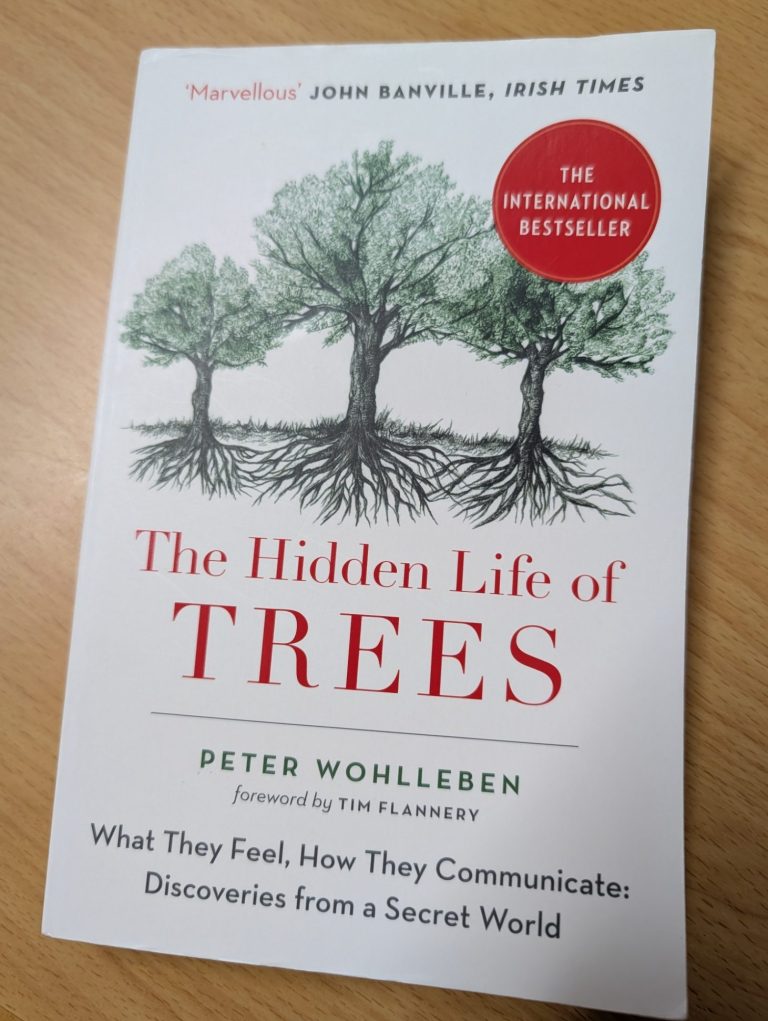
The Hidden Life of Trees. By Peter Wohlleben
This book feels like having the woodland quietly lean in and tell you its secrets 🌳
Wohlleben gently dismantles the idea of trees as solitary, silent things. Yes, the fungal network is there, but it goes further than that. Trees communicate through scent, vibrations, and subtle chemical signals. They feed and support one another, even across species lines, sharing resources and warnings like an underground and overground neighbourhood watch.
What struck me most is how cooperation, not competition, shapes healthy forests. Trees growing close together are more resilient to storms, drought, and pests. What we often see as “overcrowding” and rush to thin out is, in many cases, exactly what young trees need. Slow growth builds strength. Those patient, shaded years help trees live longer once mature, with deeper roots and sturdier wood.
It leaves you wondering how long we’ve misunderstood forests by measuring them on human timescales. Trees aren’t in a hurry. They’re playing the long game, together. 🍃
Yet to finish it, but loving the insight so far! I would highly recommend it.
November 2025
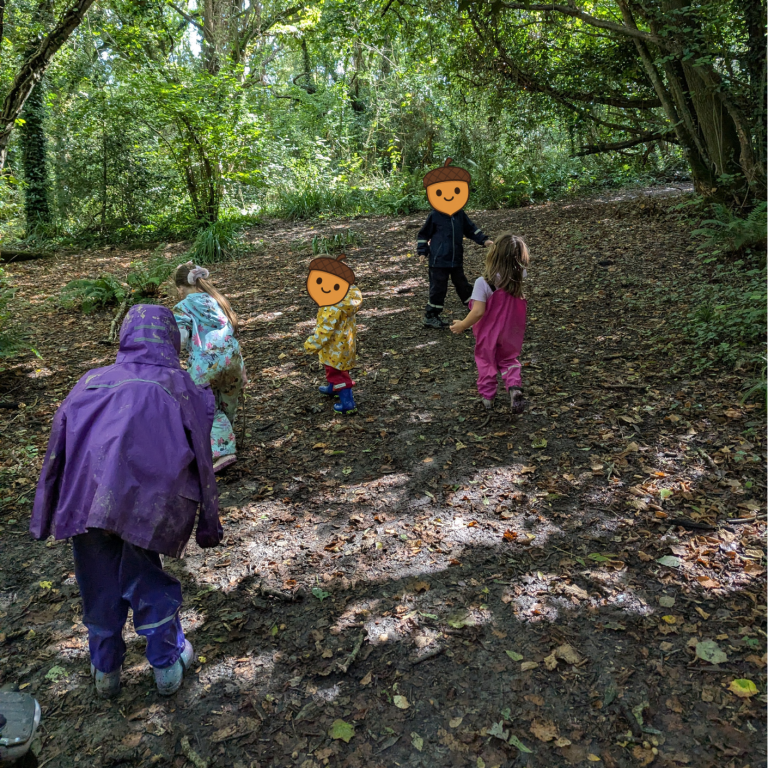
Why Forest School and Outdoor Learning?
Forest School and outdoor learning provide rich opportunities for hands-on, experiential learning in natural settings. They promote not only academic understanding but also emotional, social and physical wellbeing.
Benefits include:
Confidence and resilience: Children learn to take supported risks, problem-solve and adapt to challenges, developing perseverance and self-belief.
Social and emotional growth: Working collaboratively in outdoor environments enhances communication, empathy, and cooperation.
Creativity and curiosity: Natural spaces stimulate imagination and inquiry-based learning, helping children make meaningful connections.
Wellbeing and focus: Research shows that time in nature reduces stress, improves concentration and supports emotional regulation (Bragg et al., 2013; Natural England, 2020).
Environmental stewardship: Regular contact with nature encourages care, respect and responsibility for the environment.
Curriculum enrichment: Outdoor learning brings abstract classroom topics to life, particularly in science, mathematics and literacy (Waite, 2011).
Forest School creates a safe, inclusive and empowering learning environment where learners can thrive as capable, confident and connected individuals.
October 2025
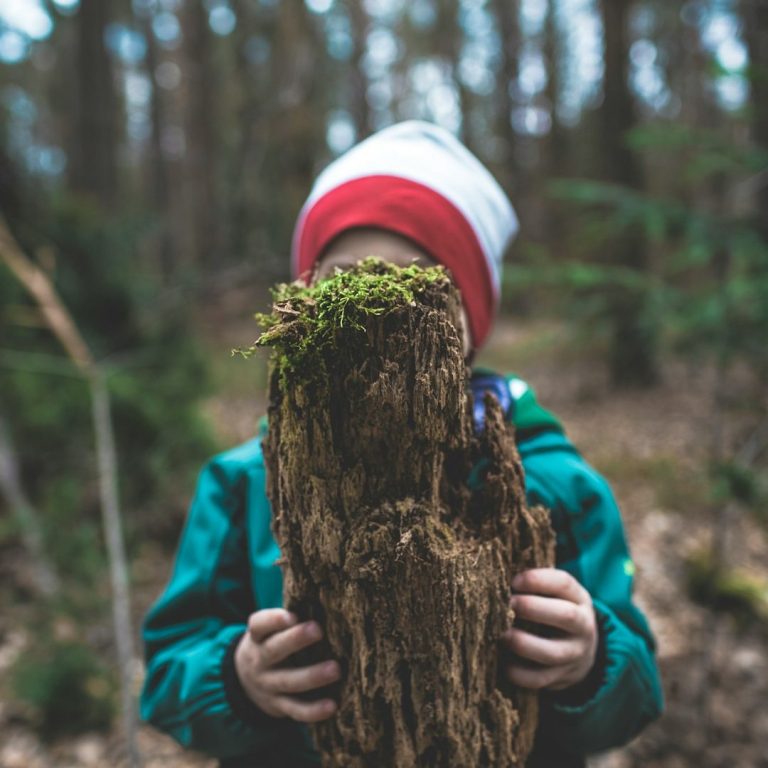
Benefits of Forest School & Outdoor Learning for Neurodiverse Learners
Forest School and outdoor learning environments are particularly beneficial for neurodiverse individuals — including those with ADHD, autism, dyslexia, and sensory processing differences — because they offer freedom, flexibility, and sensory-rich experiences that are often limited in traditional classrooms.
Key Benefits:
Reduced sensory overload: Outdoor settings naturally soften sensory input — there’s more space, gentler lighting, and calming natural sounds — which can reduce stress and anxiety (Taylor & Kuo, 2009).
Freedom to move and self-regulate: Learners can pace, fidget, climb, or find quiet spots without judgement. Movement helps regulate attention, emotion, and energy levels — particularly for those with ADHD (Berman et al., 2008).
Multisensory learning: Nature offers tactile, visual, and auditory experiences that make learning concrete and accessible for varied learning styles.
Predictable routines, flexible outcomes: Forest School follows familiar rhythms (gathering, exploring, reflecting), which provides structure, while allowing choice and autonomy — reducing anxiety linked to rigid classroom rules.
Safe space for social growth: Small-group, non-competitive settings encourage communication, turn-taking, and cooperation in authentic, low-pressure ways.
Boosts self-esteem and belonging: Success is measured through personal growth and participation, not academic comparison. This builds confidence and a sense of competence.
Supports executive function development: Activities like problem-solving, navigation, and tool use help strengthen planning, working memory, and focus — areas often challenging for neurodiverse learners (Taylor & Kuo, 2009; Roe & Aspinall, 2011).
Emotional regulation and wellbeing: Time in nature is linked to improved mood, reduced cortisol levels, and lower symptoms of anxiety and depression (Bratman et al., 2015).
September 2025
The 6 Forest School Principles
(Forest School Association, 2011)
1. Long-term, regular sessions
Forest School is a sustained process of regular sessions in the same natural setting, fostering deep connection and progressive skill development.
2. Takes place in a natural environment
A woodland or natural outdoor space provides an ever-changing, sensory-rich environment that supports exploration and discovery.
3. Promotes holistic development
Encourages growth in emotional, social, physical, intellectual, and spiritual aspects of the learner.
4. Encourages supported risk-taking
Learners are guided to assess and manage risk safely, developing responsibility and independence.
5. Run by qualified practitioners
Sessions are led by trained and qualified Forest School Leaders who maintain reflective practice and ensure safe, learner-centred delivery.
6. Learner-centred and play-based
Experiences are led by the learner’s interests and developmental stage, using play, exploration, and reflection as key tools for learning.

Further Reading...
Berman, M. G., Jonides, J., & Kaplan, S. (2008). The cognitive benefits of interacting with nature. Psychological Science, 19(12), 1207–1212.
Bragg, R., Wood, C., Barton, J., & Pretty, J. (2013). Measuring connection to nature in children aged 8–12: A robust methodology for the RSPB. University of Essex.
Bratman, G. N., Hamilton, J. P., & Daily, G. C. (2015). The impacts of nature experience on human cognitive function and mental health. Annals of the New York Academy of Sciences, 1249(1), 118–136.
Forest School Association (FSA). (2011). Principles and criteria for good practice. https://forestschoolassociation.org
Natural England. (2020). The People and Nature Survey for England: Key findings for the period April–June 2020. Natural England Statistical Release.
O’Brien, L., & Murray, R. (2007). Forest School and its impacts on young children: Case studies in Britain. Urban Forestry & Urban Greening, 6(4), 249–265.
Roe, J., & Aspinall, P. (2011). The restorative benefits of walking in urban and rural settings in adults with good and poor mental health. Health & Place, 17(1), 103–113.
Taylor, A. F., & Kuo, F. E. (2009). Children with attention deficits concentrate better after walk in the park. Journal of Attention Disorders, 12(5), 402–409.
Waite, S. (2011). Children learning outside the classroom: From birth to eleven. SAGE Publications.